

The article covers the challenges faced by retail traders due to quant trading dominance, the tools and regulations aiming to empower them, and the future of this evolving tug-of-war. It highlights education, regulatory reforms, and technology as pathways for retail investors to compete in a quant-driven market.
What is Happening in the Current Market?
In recent years, the Indian trading landscape has seen a surge in quantitative trading (quant) firms leveraging advanced algorithms and high-frequency trading (HFT) techniques. Equipped with colocated servers and sophisticated data models, these firms execute trades at lightning speeds, capitalizing on minuscule price differences. This “quant wave” has significantly transformed market dynamics, placing retail traders, often trading manually or using basic tools, at a disadvantage. As these quant strategies increase, retail traders find it increasingly challenging to compete on an uneven playing field, with many facing substantial losses.
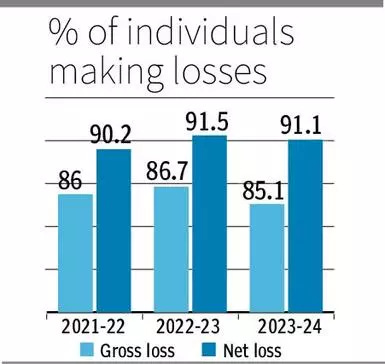
A SEBI study revealed that 91.1% of retail traders suffered losses in FY24, with aggregate losses of ₹524 billion, largely attributed to their inability to match the speed and precision of quant-based strategies.
What Are the Points of Pain for Retail Investors?
Retail investors face numerous obstacles that make it hard to stand up to the sophisticated tactics of quant traders:
Speed and Execution: Quant firms have access to cutting-edge technology and colocated servers, allowing them to place orders in microseconds. This speed advantage is simply out of reach for most retail investors.
Capital and Risk Management: Quant firms trade with large capital reserves and advanced risk management models, enabling them to take on a range of strategies like arbitrage and market making that individual investors can’t easily replicate.
Order Book Manipulation: Retail traders often find their trades disrupted by institutional algorithms that manipulate bid-ask spreads and trigger stop losses.
High Costs and Infrastructure Limitations: While quant firms have dedicated resources for trading infrastructure, retail traders must rely on broker platforms with limited API access and slower execution times.
Are There Any Saviors for Retail Investors ?
Despite these challenges, there are some emerging tools, platforms, and regulatory measures that could offer relief to retail investors:
Retail Algo Platforms: Platforms like Zerodha Streak and Sensibull provide retail investors with access to basic algorithmic tools, allowing them to design and test strategies without needing extensive coding knowledge.
Open-Source Libraries: For more technically savvy traders, Python libraries like PyAlgoTrade and backtesting frameworks like QuantConnect make algorithmic trading accessible and affordable.
Educational Content: Initiatives by trading platforms, YouTube channels, and online courses provide knowledge on the basics of algorithmic trading and market dynamics, enabling retail traders to better understand and adapt to a quant-dominated market.
Policy and Regulation by SEBI: The Securities and Exchange Board of India (SEBI) has implemented guidelines aimed at balancing the market dynamics, including limiting order-to-trade ratios to reduce unfair advantages and enhancing transparency. For better description read “High Frequency Trading: A Switchback for Indian Capital Market“ by [By Ananya Sahu and Ketan Priyadarshee]
Do These Saviors Have Any Interest in Helping Retail Traders?
While these platforms and tools offer some relief, their motives may not always align with purely helping retail traders. Platforms benefit from increased participation and higher transaction volumes, while regulatory bodies aim to maintain market integrity. At the same time, these entities see the need to educate retail investors as beneficial for a healthier, more engaged market ecosystem. However, true advocacy for retail interests is challenging to sustain in a market where profits and efficiency often overshadow small-scale players' needs.
Big financial firms may have several interests, both financial and humanistic, in supporting retail traders against the overwhelming dominance of quant trading firms.
Financial Interests
Increased Market Participation and Liquidity
Retail traders represent a large segment of the trading population. Supporting them leads to higher market participation, which enhances overall liquidity. Greater liquidity benefits all participants, including large firms, as it reduces transaction costs and improves market efficiency.Revenue from Retail-Oriented Products and Services
Platforms like Zerodha, Upstox, and ICICI Direct benefit financially from offering tools tailored to retail traders, such as algorithmic trading platforms (e.g., Zerodha Streak) or educational resources. These platforms earn fees from increased retail participation and trade volumes, directly boosting their revenue streams.Diversification of Revenue Sources
By catering to retail traders, large firms can reduce their reliance on institutional clients. This diversification provides more stable revenue in the face of market volatility or regulatory changes targeting institutional trading practices.
Humanistic Approach
Building Trust and Brand Loyalty
Supporting retail traders through accessible tools, educational programs, and fair trading practices helps build trust and a loyal customer base. Firms that are seen as empowering individuals may gain reputational benefits, which can translate into long-term customer retention and growth.Ethical Responsibility in a Competitive Market
Financial firms often emphasize Corporate Social Responsibility (CSR). Helping retail traders level the playing field aligns with the broader goal of fostering fairness and inclusivity in financial markets. These actions also mitigate perceptions of exploitation or unfair practices.Commitment to Financial Literacy
Many big firms actively promote financial education as part of their mission to empower individuals. For example, initiatives to educate retail traders on market dynamics, algo trading basics, and risk management foster a more informed and resilient market ecosystem.
Conclusion
This battle between retail traders and quant firms is complex, with significant hurdles for retail participants. Yet, with education, regulatory reforms, and increasingly accessible trading tools, there may be a path forward for the retail investor. As the dynamics of Indian markets continue to evolve, so too will the tools and strategies available to those willing to adapt.